Local SEO is how nearby customers find your business the moment they search for what you offer. That's the whole idea in one sentence. Everything else in this guide is just the "how."
If you've ever wondered why one coffee shop shows up on the map and another doesn't, or why a plumber three streets away keeps getting the calls that should be yours, the answer is almost always local SEO. Get it right, and you become the obvious choice. Get it wrong, and you become invisible, no matter how good your business actually is.
This guide walks through the whole picture: what local SEO is, how search engines actually process your business behind the scenes, how the work gets done day to day, how to measure it, and how it's changing in the age of AI search. Grab a coffee. This one's thorough.
The One-Line Answer: What Local SEO Actually Is
Local SEO is the practice of optimizing your online presence so people searching nearby find, trust, and choose your business. It combines your website, your Google Business Profile, your reviews, and your reputation across the web into one coordinated signal that tells Google: "this business deserves to be seen first."
The key takeaway to remember through everything below: local seo isn't a single tactic. It's a system. Every piece supports the others, and neglecting one weakens the rest.
Before You Touch a Single Setting: Getting Started the Right Way
Most businesses jump straight into tactics, adding keywords here, requesting a review there, without a foundation. That's backwards. Getting started with local SEO properly means answering three questions first:
Who exactly are you trying to reach? A family dentist and a 24-hour emergency electrician need very different content and profiles.
Where exactly do you serve? One city, five neighborhoods, or an entire metro area? This shapes everything from your page structure to your keyword list.
What does a "win" look like? More phone calls, more foot traffic, more bookings. Pick one to anchor your strategy.
Once those three are answered, the tactics below actually have something to attach to.
The Three Faces of Local SEO (and What Each One Controls)
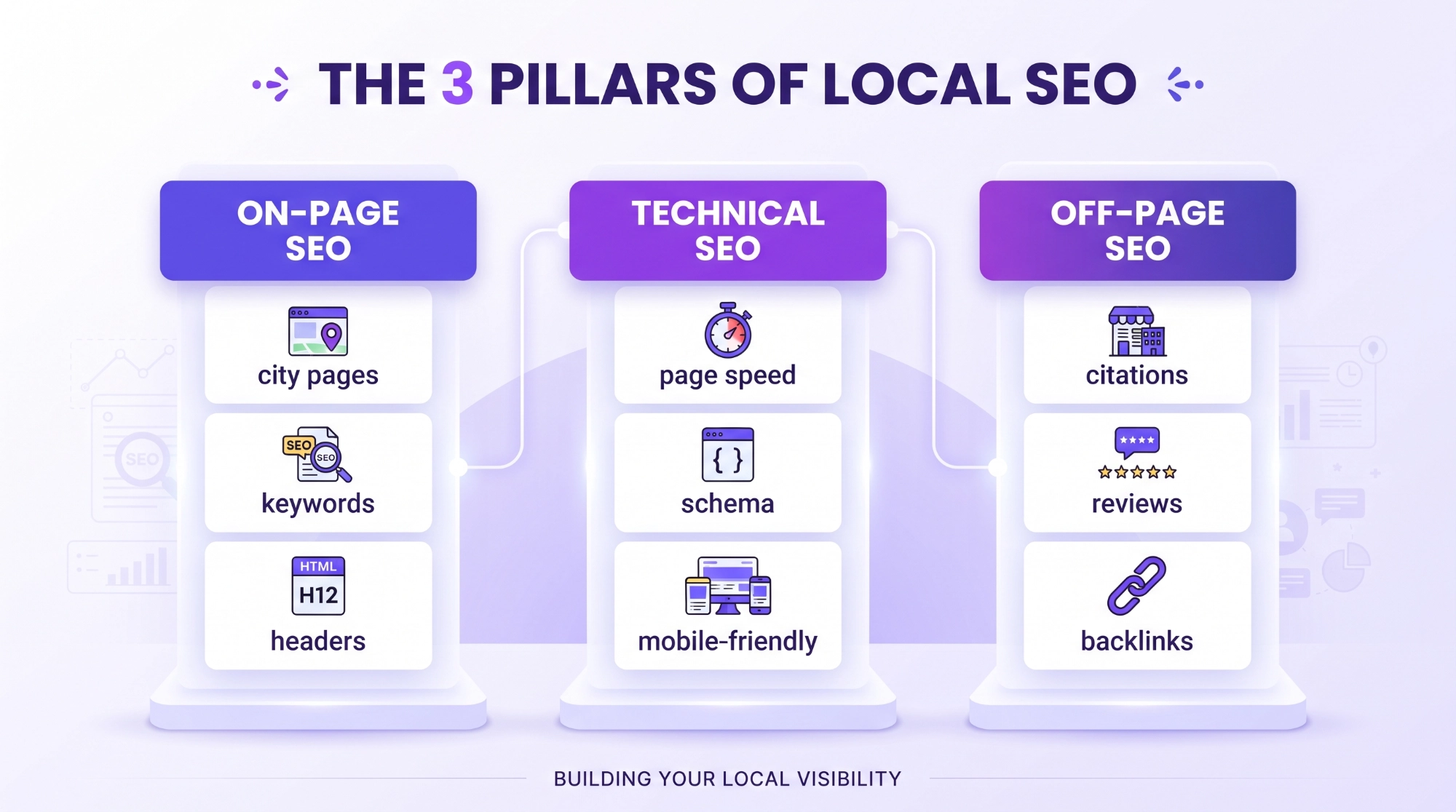
Local seo splits into three interlocking specializations. Each has its own ranking factors, and ignoring one drags down the other two.
On-Page Local SEO: What Your Website Says and Shows
On-page SEO covers everything visible and editable on your own site: your titles, headers, city-specific pages, and embedded contact details.
Content optimization sits at the heart of this. It has two audiences to satisfy at once:
Human engagement. Real visitors need a clear answer to "can this business help me, right now, near me?" within seconds of landing on the page.
Search engine readability and rankings. The same page needs clean structure, clear headers, and relevant local keywords so Google can confidently match it to the right searches.
Good on-page local SEO does both simultaneously. It never sacrifices one for the other.
Technical Local SEO: The Engine Room Nobody Sees
Technical optimization is the invisible scaffolding holding everything up: page speed, structured data, canonical tags, mobile-friendliness, and crawlability. Customers never notice it directly, but they absolutely notice when it's missing, through slow load times, broken pages, or a site that simply never shows up.
Off-Page Local SEO: Your Reputation Beyond Your Own Website
This is brand and authority building happening everywhere except your own domain: citations, backlinks, and reviews. Business citations are descriptions of your company that appear in listings like Yelp or Yellow Pages, and they serve as a source of backlinks that can impact local search rankings. Off-page SEO is essentially Google asking the rest of the internet, "does anyone else vouch for this business?"
Local SEO Specialties Worth Knowing
Within these three pillars, a few specialties have emerged specifically for local businesses: Google Business Profile management, citation cleanup and consistency, review generation and response, multi-location SEO, and local link building through community partnerships. Most successful local seo strategy work blends all five.
So, What Actually Moves the Needle?
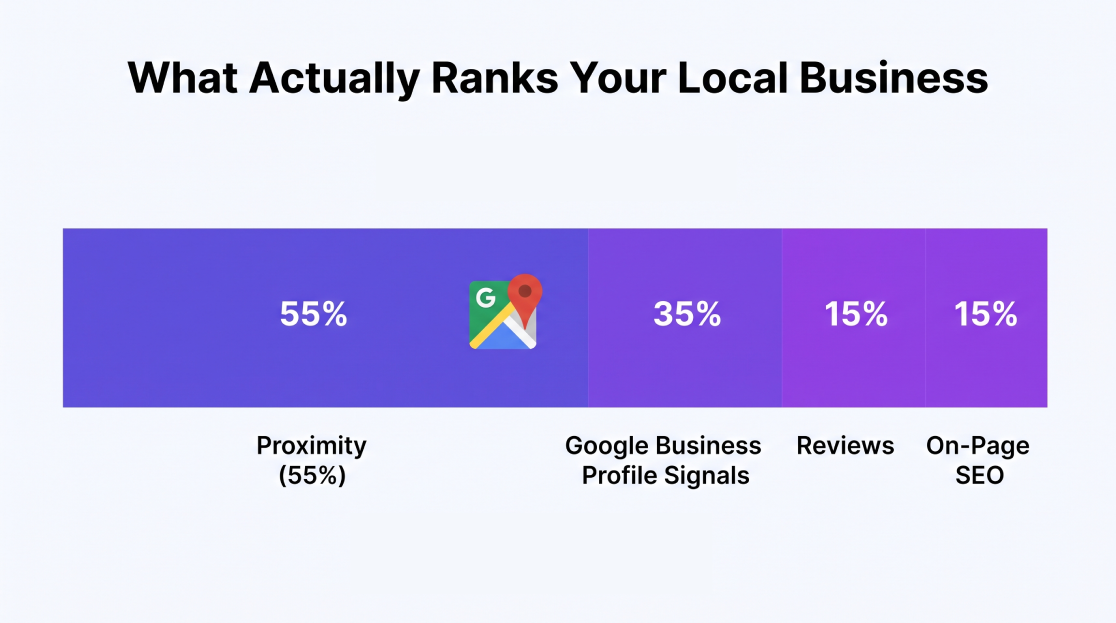
Proximity to the searcher accounts for roughly 55% of ranking decisions, more than any other single factor, according to industry ranking factor research. Google Business Profile signals, reviews, and on-page SEO follow behind it. You can't move closer to every searcher, but you can absolutely strengthen everything else on that list, and that's where your effort belongs.
What's Really Happening Behind the Scenes When Google Finds You
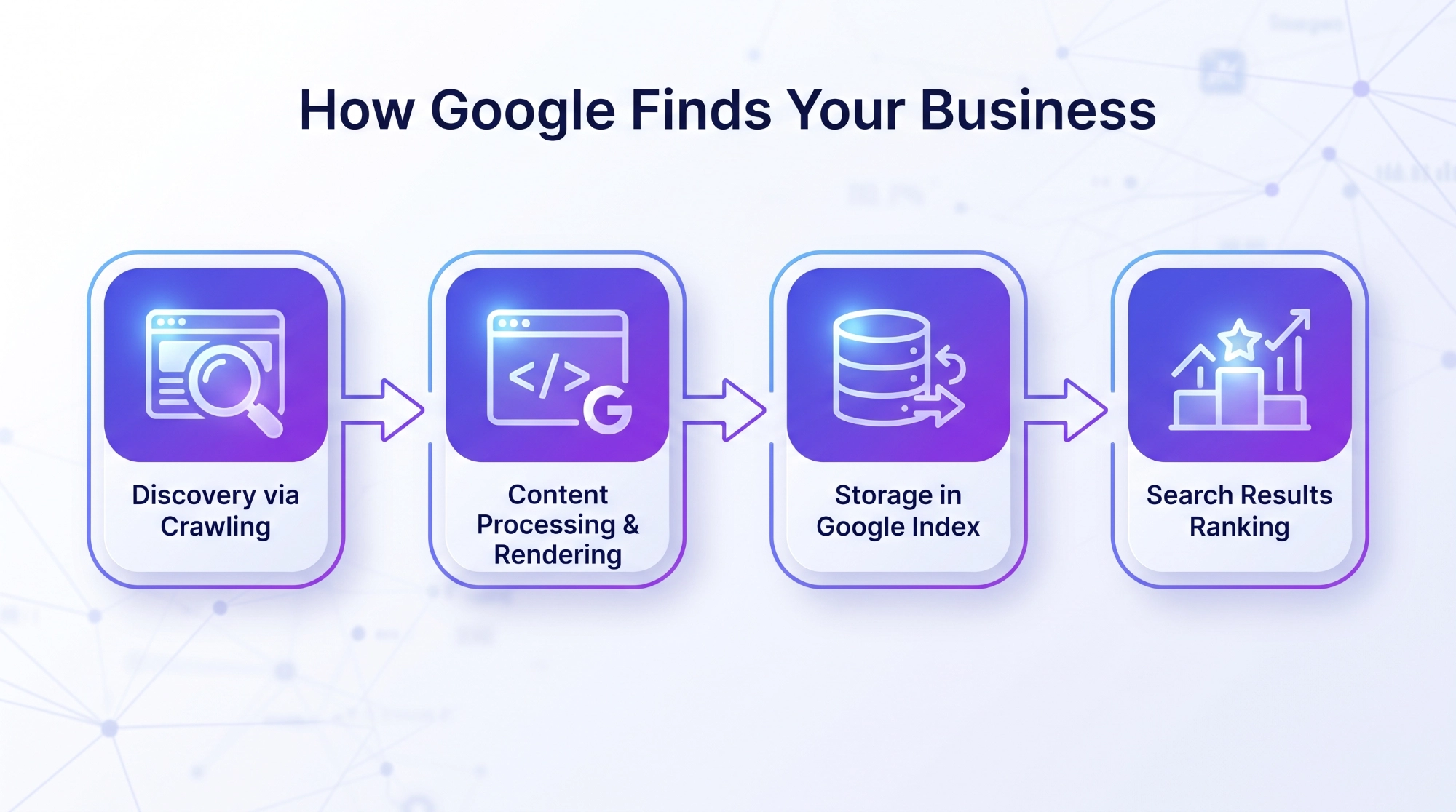
To make smart decisions about where to invest your time, it helps to understand the actual machinery search engines run on. There are four stages, not three, and most guides skip the one in the middle.
Stage One: Getting Noticed (Crawling)
Crawling is the process where search engine bots discover new or updated content, and they can crawl content by following links. Google's crawlers don't know your business exists until they follow a path, either from another page or from your Google Business Profile, straight to you.
Stage Two: Building the Page (Rendering)
This step gets left out of most explanations, and it matters more than ever. When someone visits your website, their browser receives HTML, CSS, and JavaScript files and transforms them into a readable, interactive page. This transformation is rendering. Search engines go through the same process.
Google's two-phase crawl-then-render process means JavaScript-dependent content can remain unindexed for days, while server-side rendering eliminates this delay entirely. If your local landing pages rely heavily on JavaScript to display key information like hours or address, this is worth checking. A page that looks perfectly fine to a human visitor can still be functionally invisible to a search engine if it isn't rendered properly.
Stage Three: Filing It Away (Indexing)
Not all crawled pages are indexed. If a page is blocked by a robots.txt file or returns an error, Google may crawl it but still not store or show it in search results. Indexing is Google deciding a page earned a permanent spot in its database.
Stage Four: Deciding the Order (Ranking)
Search engines rank pages using a complex method involving multiple algorithms, aiming to rank content according to quality and relevance. For local searches specifically, this stage adds proximity and trust into the formula, which is exactly why a smaller, closer business can outrank a much larger competitor across town.
How Local SEO Actually Gets Done, Step by Step
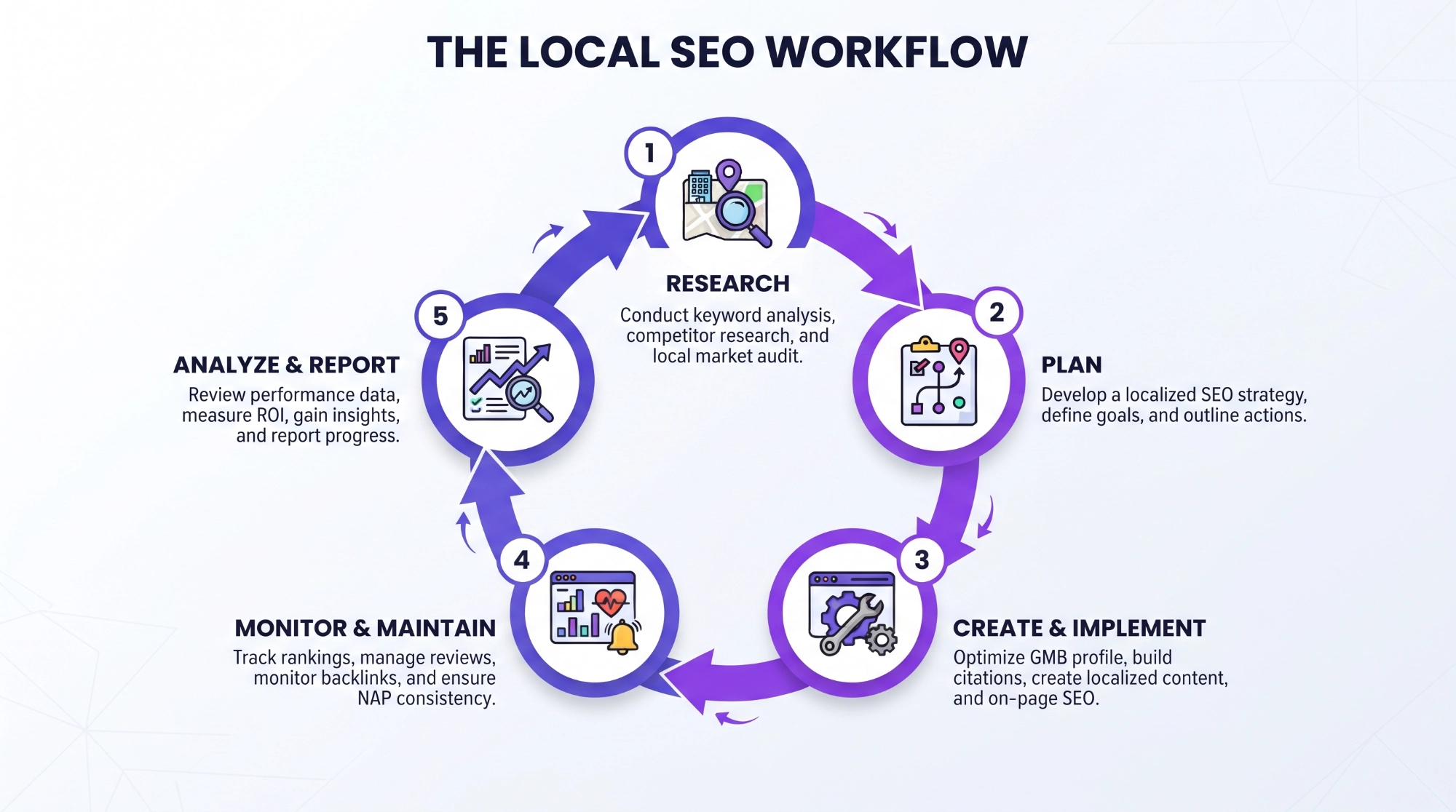
Understanding the theory is one thing. Here's the actual workflow behind a functioning local seo campaign.
1. Researching. Identify your services, your service areas, your competitors, and the exact phrases customers already use to search for you.
2. Planning. Turn that research into a real roadmap: which pages need to be built, which citations need fixing, which reviews need requesting, and in what order.
3. Creating and Implementing. Build the city-specific pages, complete the Google Business Profile, fix the technical issues, and publish content that actually answers customer questions.
4. Monitoring and Maintaining. Track rankings, watch for new duplicate listings, and keep your Google Business Profile active with fresh posts and photos.
5. Analyzing, Assessing, and Reporting on Performance. Review what's working, cut what isn't, and adjust your next quarter's priorities based on real data, not guesswork.
Why Local SEO Never Really "Finishes"
Here's the part nobody wants to hear: local SEO doesn't have a finish line. Competitors update their profiles. Google refines its algorithm. Reviews age. A ranking you earned last year can quietly erode if nothing new reinforces it. Treat it the way you'd treat fitness, not a diet: consistent, ongoing effort beats short, intense bursts every time.
So, When Will I Actually See Results?
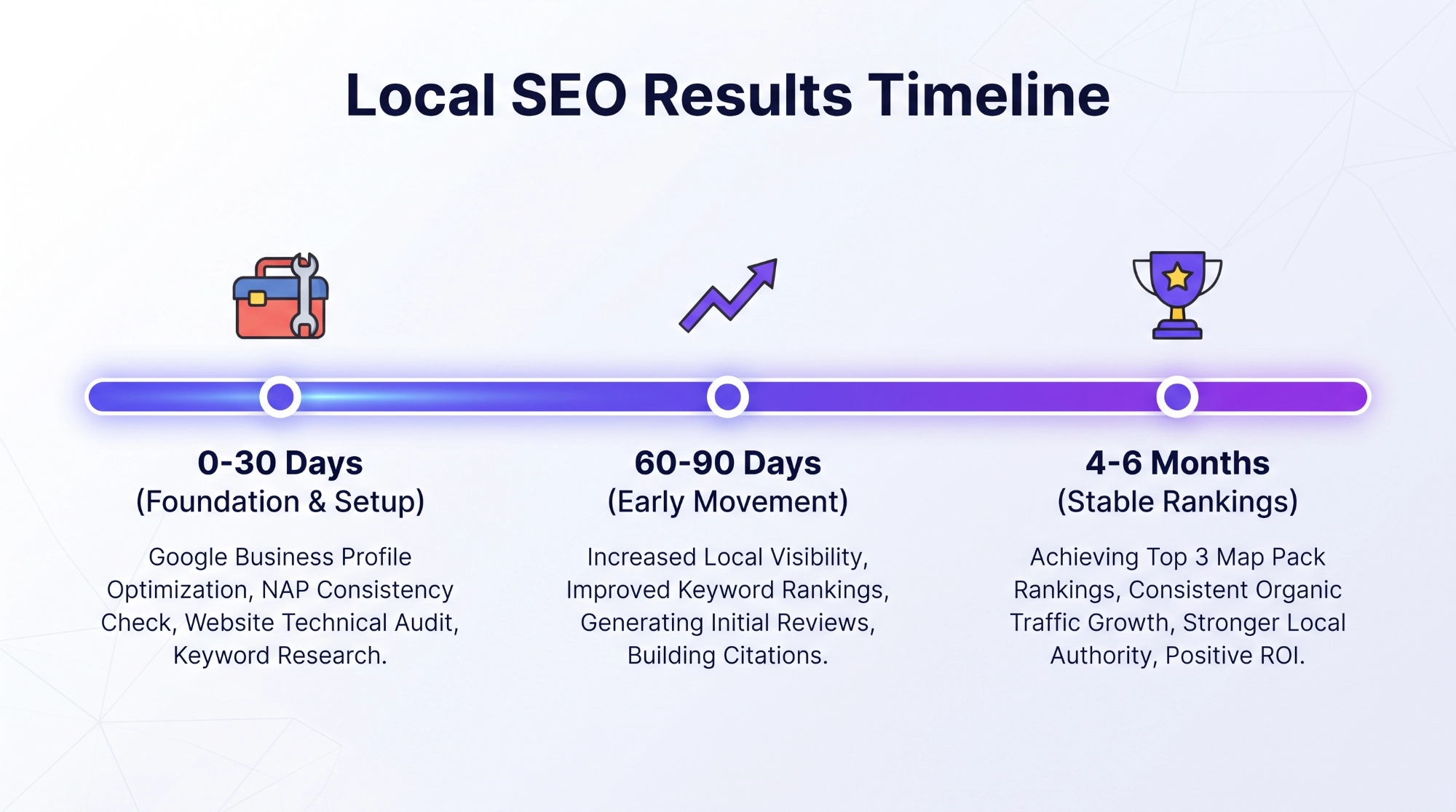
Most businesses notice early movement within 60 to 90 days, particularly around Google Business Profile changes, which tend to reflect faster than website changes. A fully matured local seo strategy, where your rankings feel stable rather than reactive, typically takes 4 to 6 months of consistent work. If someone promises page-one rankings in two weeks, be skeptical. Sustainable visibility is built, not switched on.
Setting Your Local SEO Strategy and Objectives
Your strategy should trace directly back to the "win" you defined earlier. A restaurant chasing walk-ins needs a different plan than a law firm chasing consultations. Set one primary objective, two or three supporting goals, and a realistic timeline. Revisit all three every quarter, because your market, your competitors, and Google's own systems are all moving targets.
The Numbers That Actually Matter: What to Measure
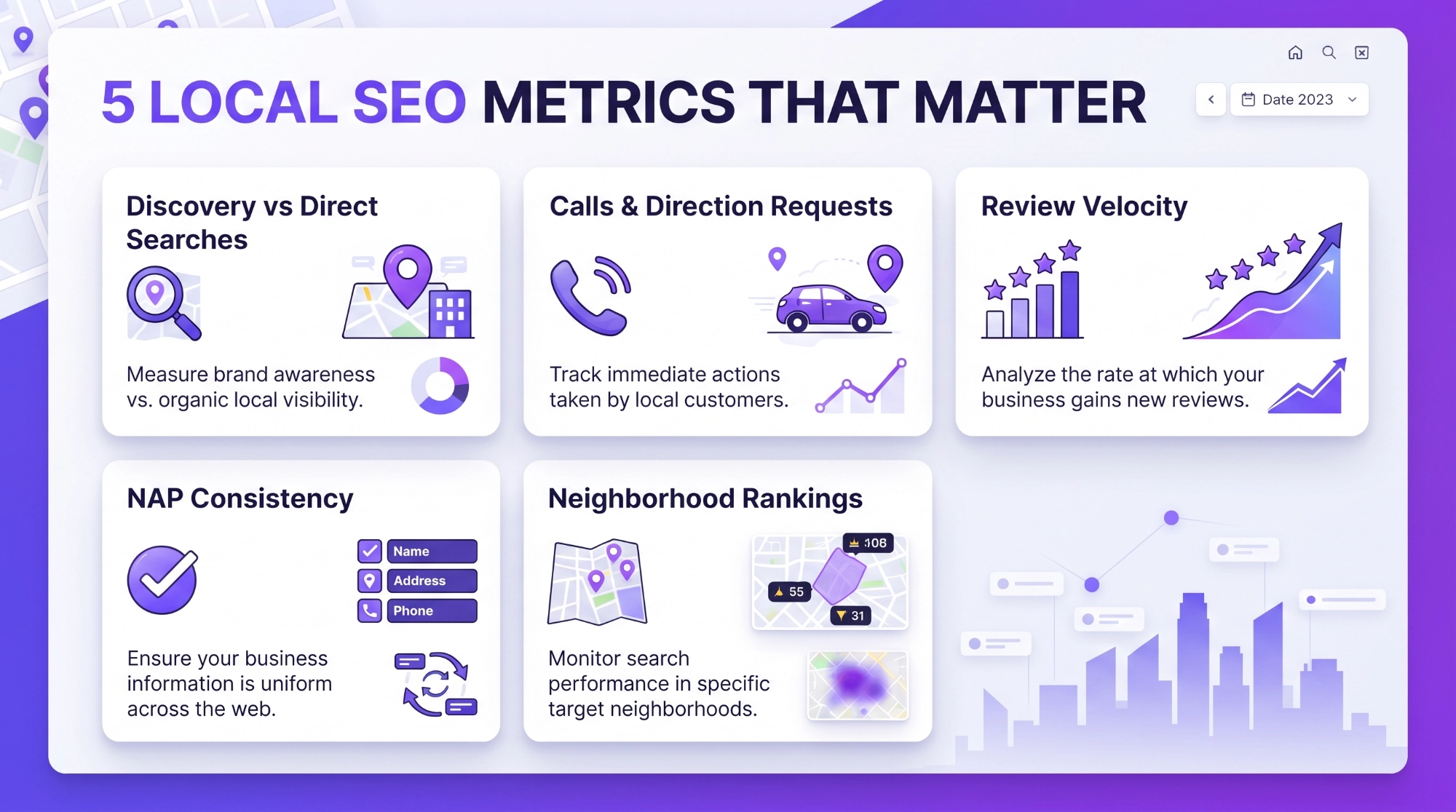
It's easy to drown in data that doesn't actually tell you anything useful. Focus on these instead:
Discovery searches vs. direct searches. Direct searches show people who already searched your business name, while discovery searches show people finding you through a general search term. Growing discovery searches means your visibility is genuinely expanding.
Calls, direction requests, and website clicks. These are the closest thing to real customer intent you can measure directly from your Google Business Profile.
Review velocity and average rating. A steady flow of new, genuine reviews outperforms a stagnant pile of old ones.
NAP consistency across directories. A quiet but critical metric; even small mismatches erode trust.
Local keyword rankings by neighborhood, not just citywide, since a single city ranking can hide major gaps in specific areas.
Check these monthly. Daily fluctuations will drive you in circles without telling you anything real.
Local SEO vs. SEM vs. PPC: Which One Do You Actually Need?
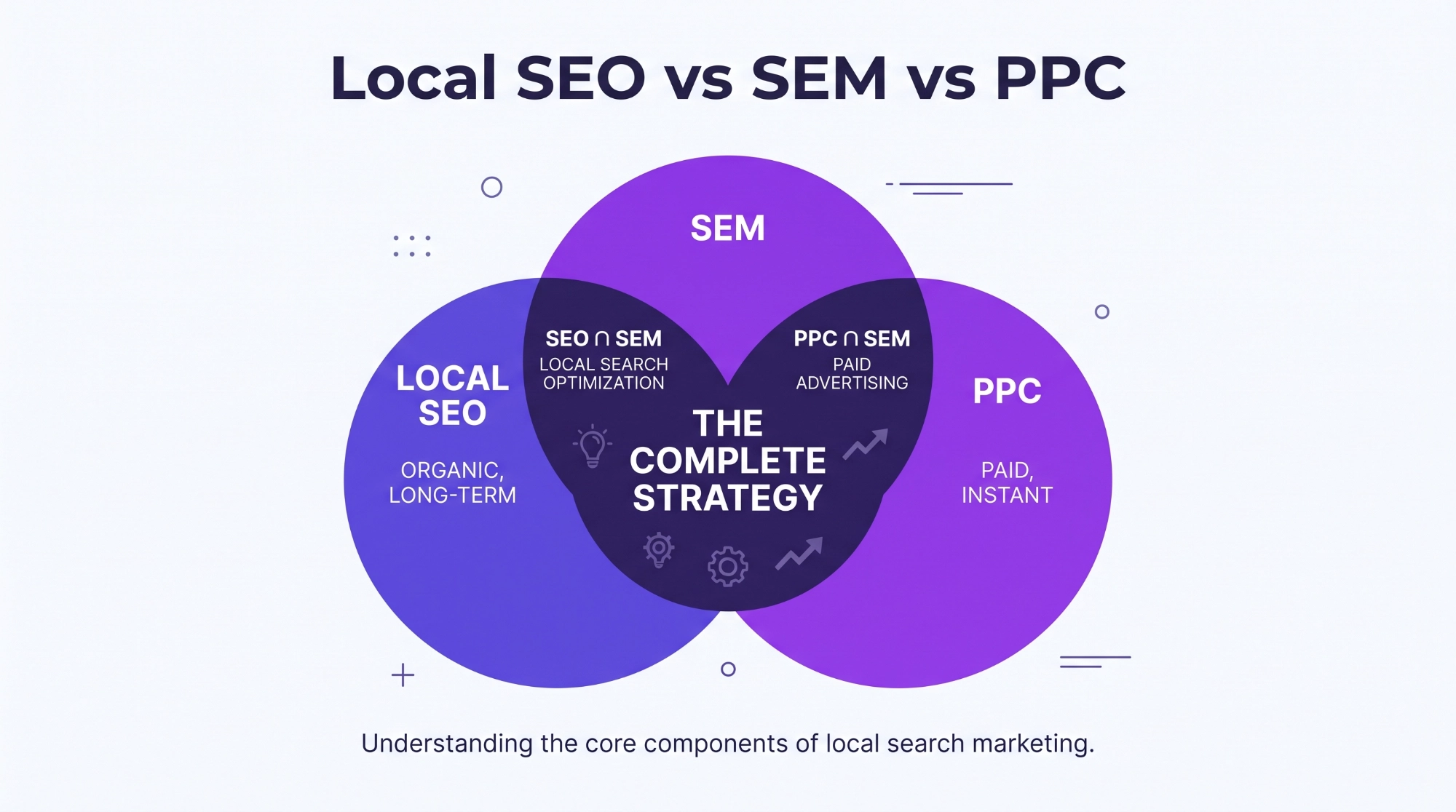
These three terms get mixed up constantly, so here's the plain version.
Local SEO vs. SEM
SEO is the process of improving your website to generate organic traffic, while SEM includes paid methods to show up in searches. Local seo is the organic half of that equation, focused specifically on nearby customers. SEM is the umbrella term covering both organic and paid local visibility together.
Local SEO vs. PPC
PPC is a paid advertising model where businesses pay each time someone clicks their ad, while SEM is the broader strategy that can include both PPC and organic SEO. PPC can put you at the top of the page instantly, for as long as your budget lasts. Local seo takes longer to build but keeps working long after you stop actively investing in it.
The smartest approach usually isn't choosing one. It's using PPC for immediate visibility while your local seo strategy compounds in the background.
Why Local SEO Actually Matters (Beyond "Everyone Says So")
76% of people who conduct a local search on their smartphone visit a business within 24 hours, and 28% of those searches result in a purchase. That statistic alone should reframe how seriously you take this. A local search isn't idle curiosity. It's one of the closest things to a buying signal that exists online.
The Real Advantages
Customers arrive already convinced you're nearby and relevant, shortening your sales cycle.
Local seo compounds over time instead of switching off the moment you stop paying, unlike ads.
Showing up consistently across search and maps builds genuine brand trust, not just clicks.
How Is Local SEO Different From AI Search and GEO?
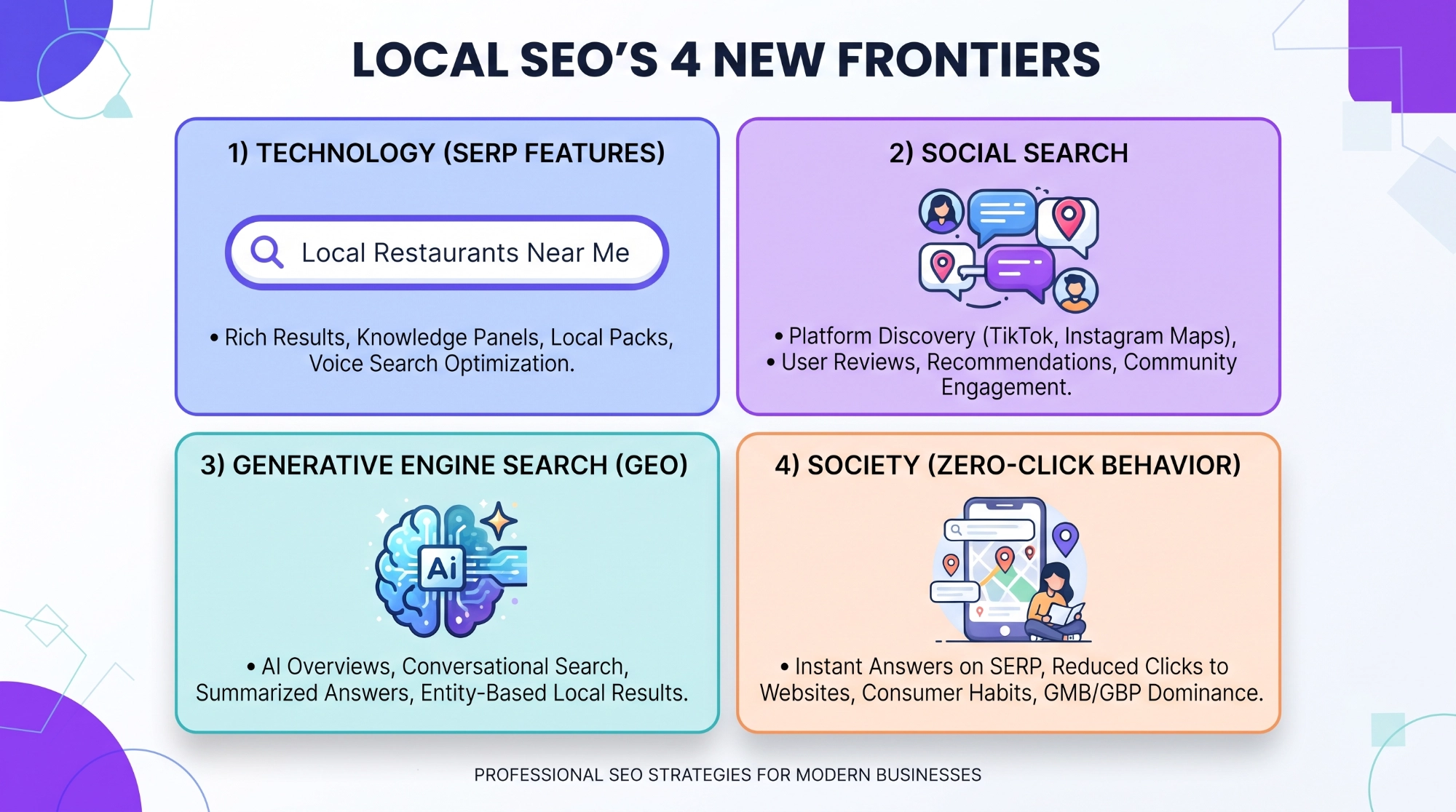
Search itself is shifting, and local businesses need to understand what's actually changing versus what's just noise.
Adapting With Technology
Search results pages now include far more than ten blue links. As of 2026, Google displays dozens of distinct SERP features, including AI Overviews, Featured Snippets, Local Pack, and Knowledge Panels. Local seo now has to earn visibility across several of these formats at once, not just a single ranked list.
Adapting to Social Media Search
More customers, especially younger ones, now search directly inside social platforms before ever opening Google. A consistent business profile and genuine reviews carry weight there too, even though the ranking mechanics differ from traditional search engines.
Adapting to Generative Engine Search
Generative Engine Optimization (GEO) is the practice of making sure AI-powered tools and chat assistants can find, understand, and recommend your business. Google's guidance consistently emphasizes creating content for people first, and if content genuinely answers a user's question well, it's a strong candidate for AI Overview citation, regardless of whether that was the explicit goal. In other words, the same helpful, well-structured content that wins traditional local seo rankings is also what wins in AI search.
Adapting to Society
Consumer behavior itself keeps shifting toward instant, zero-click answers. Zero-click searches and AI-driven results mean businesses must track how users interact on Maps, not just website visits, and review velocity, local CTR, and NAP consistency matter more than ever. The businesses that adapt fastest are the ones that treat every platform, not just Google's classic search results, as part of one connected visibility strategy.
Should You Handle This Yourself, or Bring in Help? (Local SEO as a Service)
There's no universally right answer here, only a right answer for your situation.
Handle it yourself if you manage a single location, can commit consistent weekly time, and are comfortable making basic website edits.
Bring in outside help if you're managing multiple locations, you're losing ground to competitors despite genuine effort, or your time is simply worth more spent running the business than researching algorithm updates.
If you'd rather hand this off entirely, xperts5.com builds and manages complete local seo campaigns, covering Google Business Profile optimization, technical audits, content, and genuine local link building, so you can stay focused on running the business instead of chasing rankings.
How to Keep Learning: Resources Worth Bookmarking
Rather than chasing secondhand advice, go straight to the source whenever you can.
Google's Local Business structured data documentation explains exactly how to mark up your business for rich results.
Google's guide to creating helpful, reliable, people-first content lays out precisely what its ranking systems are built to reward.
Search Engine Land's Periodic Table of SEO Elements breaks down the broader universe of ranking factors into a genuinely useful visual reference, still relevant when you layer local-specific factors on top.
Developing Your Local SEO Skills From Here
Reading is the first step. The real skill develops through repetition: auditing real profiles, watching how rankings shift after a change, and getting comfortable adjusting your approach as Google's systems evolve. Local seo rewards patience and consistency far more than clever shortcuts. Start with your Google Business Profile this week, build outward from there, and give the process the months it genuinely needs to work.
Ready to Put This Into Practice?
Everything in this guide works, but it takes real, ongoing execution across your profile, your website, and your reputation at the same time. If you'd rather have a dedicated team handle it, xperts5.com is ready to build your local seo strategy from the ground up. Reach out, and let's find out exactly where your visibility is leaking opportunity right now.
Frequently asked questions
It's the process of optimizing your online presence so nearby customers find your business first when they search for what you offer.
Regular SEO competes for the single most authoritative page anywhere. Local seo competes for the closest, most trustworthy business to the specific person searching, with your Google Business Profile playing a leading role.
Crawling discovers your content, rendering builds the actual page from your code, indexing stores and organizes what's found, and ranking decides where your business appears for a given search.
Most businesses see early movement within 60 to 90 days, with a fully matured strategy typically taking 4 to 6 months of consistent effort.
No. Local seo is the organic side of local visibility. SEM is the broader umbrella that includes both organic SEO and paid PPC advertising together.
Focus on discovery searches, calls, direction requests, website clicks, review velocity, and local keyword rankings by neighborhood, checked monthly rather than daily.
Yes, and arguably more than ever. The same helpful, well-structured, accurate content that wins traditional local rankings is also what AI tools rely on to recommend businesses.
NAP stands for Name, Address, and Phone number. Keeping it identical across your website, profile, and every citation prevents confusion that quietly damages trust and rankings.
Yes. Proximity and genuine trust signals, like consistent reviews and accurate information, often matter more than sheer company size.
Either works. Single-location businesses with consistent time to invest often manage it well themselves. Multi-location businesses or those short on time typically see faster, more reliable results working with a dedicated team.